European digital identity is moving towards reusable wallets, stronger interoperability, and more dynamic risk assessment. In this article, Gataca explores how that changing landscape creates an opportunity for operators to rethink KYC before the regulatory transition arrives.
For years, online gaming identity verification has followed a familiar pattern.
A player registers. Personal information is collected. Documents may be uploaded. Checks are completed. The account is approved.
It is a process the industry understands.
But the environment around that process is changing quickly.
AI-generated identities, sophisticated document manipulation and deepfakes are creating new fraud challenges. At the same time, Europe is moving towards a new digital identity infrastructure built around reusable credentials and European Digital Identity Wallets.
For operators, these developments are arriving alongside wider changes to European anti-money laundering regulation.
That makes 2027 more than another compliance deadline.
It could mark the beginning of a fundamentally different relationship between players, operators and digital identity.
From uploading identity to carrying it
One of the biggest changes is conceptual.
Today, proving identity often means repeatedly providing information to different businesses.
A player may complete verification with one regulated service and then go through a similar process again somewhere else.
Digital identity wallets change that model.
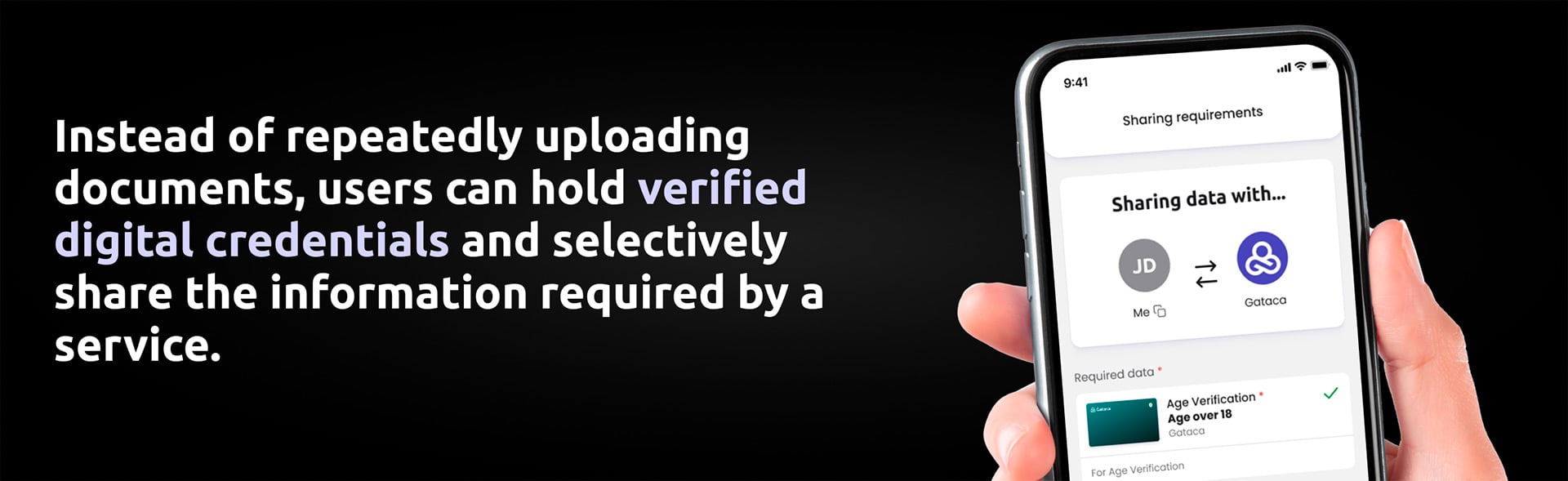
Gataca’s technology is built around this reusable identity model. Its platform works with credentials based on open standards, including W3C Verifiable Credentials and ISO mDL and is designed to interact with the 27 EUDI Wallets as well as other standards-compliant wallets.
For iGaming, the implications are significant.
A player could prove an attribute such as age or identity using trusted credentials without every interaction requiring another traditional document-upload journey.
The shift is from repeatedly asking players to prove who they are towards allowing trusted identity to travel with them.
Why 2027 matters
Under Europe’s revised digital identity framework, EUDI Wallets are moving towards widespread availability and acceptance.
Gataca notes that private organisations required to perform strong user authentication for online identification, including iGaming businesses, will need to accept European Digital Identity Wallets by the end of 2027.
At the same time, the European AML landscape is changing through the new Anti-Money Laundering Regulation and the development of a more harmonised supervisory framework.
Waiting until those requirements become operational creates an obvious risk.
Identity infrastructure touches onboarding, compliance, fraud, customer experience and potentially multiple internal systems. It is therefore difficult to treat it as a last-minute integration.
Operators have an opportunity to begin understanding the technology, testing wallet-based verification, and determining how reusable credentials could fit into existing KYC processes before adoption becomes a necessity.
Verification alone is no longer the whole problem
There is another reason identity infrastructure is changing.
A successful identity check tells an operator something important at a particular moment.
But risk does not necessarily remain static after that moment.
Fraud can operate across accounts, devices, transactions, and platforms. AI-generated identities and increasingly sophisticated manipulation techniques make it harder to assume that passing one verification check tells the complete story.
This is where Gataca’s proposition extends beyond digital wallets.
Its Identity Intelligence layer is designed to interpret identity signals in real time and generate dynamic trust scores. Verification requirements can then adapt according to configured risk scenarios.
A higher-risk interaction can trigger additional checks, while a legitimate lower-risk user does not necessarily need to experience the same friction.
That represents an important change in thinking.
The question is no longer only, “Has this player passed KYC?” It is increasingly, “What do we know about the trustworthiness of this identity right now?”
Not every player should face the same friction
This also addresses one of the industry’s longstanding tensions.
Operators need stronger controls, but additional verification steps can create friction for legitimate customers.
Applying maximum friction to everyone is one way of managing risk, but it is not necessarily an intelligent one.
A risk-based identity model creates another possibility.
Trusted users can move through simpler journeys while unusual or higher-risk interactions receive additional scrutiny.
Gataca describes this as adaptive verification, using identity signals and configured risk policies to determine when further checks are appropriate.
That matters commercially as much as it does from a compliance perspective.
Reducing unnecessary friction can support onboarding and customer experience, while stronger verification can be concentrated where risk actually appears.
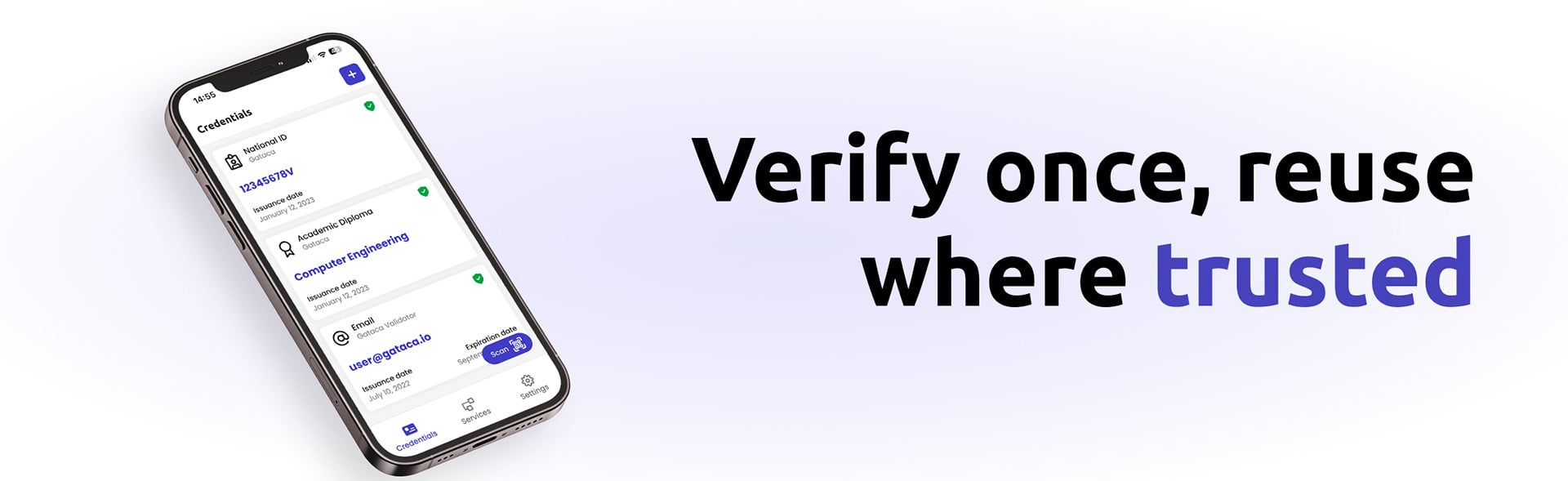
Reusable credentials could also change how operators think about repeated verification.
If trusted information can be securely stored within an identity wallet and presented again when required, the industry can begin moving away from repeatedly collecting the same documents.
Gataca’s wallet model allows users to control which verified information they share. Selective disclosure can also allow somebody to prove a specific fact without revealing unnecessary personal information.
For example, proving that a user meets an age requirement does not inherently require every service to receive their full date of birth and complete identity document.
That has implications not only for convenience, but also for data minimisation.
The less unnecessary personal information a business needs to collect and retain, the smaller the amount of sensitive identity data exposed within the customer journey.
Interoperability will be critical
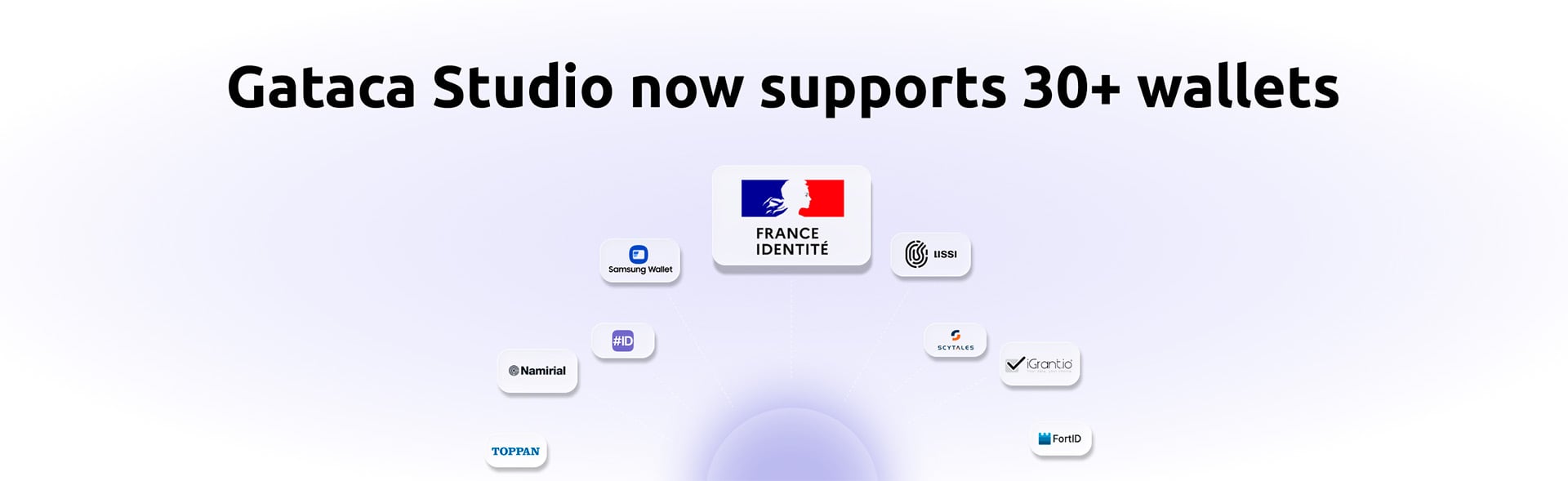
The future is unlikely to involve one identity wallet controlling the entire market.
Different governments, providers, and ecosystems will issue wallets and credentials.
For operators, that makes interoperability essential.
Having to build a separate identity integration for every wallet would simply replace one form of fragmentation with another.
Gataca’s architecture is designed around open standards and interoperability, allowing organisations to interact with multiple compliant wallet ecosystems through a common identity infrastructure.
That could become particularly important for operators working across European markets as national EUDI Wallet implementations emerge.
Identity is becoming infrastructure
For a long time, KYC could be viewed primarily as a compliance process attached to onboarding.
That definition is becoming too narrow.
Identity increasingly sits at the intersection of fraud prevention, AML, age assurance, responsible access, privacy, onboarding conversion and customer experience.
The arrival of reusable digital credentials and EUDI Wallets will only make that layer more important.
Operators therefore have a decision to make.
They can wait until new identity requirements become another compliance project.
Or they can begin treating identity as infrastructure now.
Gataca’s approach combines interoperable ID wallet verification with reusable credentials and real-time Identity Intelligence, allowing organisations to move from static verification towards a more adaptive model of digital trust.
The technology will continue evolving, and regulation will continue defining how it must be used.
But the direction is becoming increasingly clear.
The future of KYC may not be asking players to prove their identity again and again. It may be allowing trusted players to carry verifiable identity with them, while giving operators better intelligence about when additional verification is actually required.
For operators preparing for EUDI Wallet adoption, evolving AML requirements or the wider shift towards reusable digital identity, NYCE can facilitate an introduction to Gataca and help start the conversation ahead of the 2027 transition.
For enquiries, please contact sales@nyceint.com.
Related reading: Why identity is becoming the most critical layer in iGaming infrastructure and Why Proactive Cyber Security Is Becoming a Business Imperative.
Explore Gataca in the NYCE Product Marketplace, or contact NYCE to discuss an introduction.
Originally published in the NYCE Marketplace section on Yogonet on September 9, 2026.